A collection of photos and videos
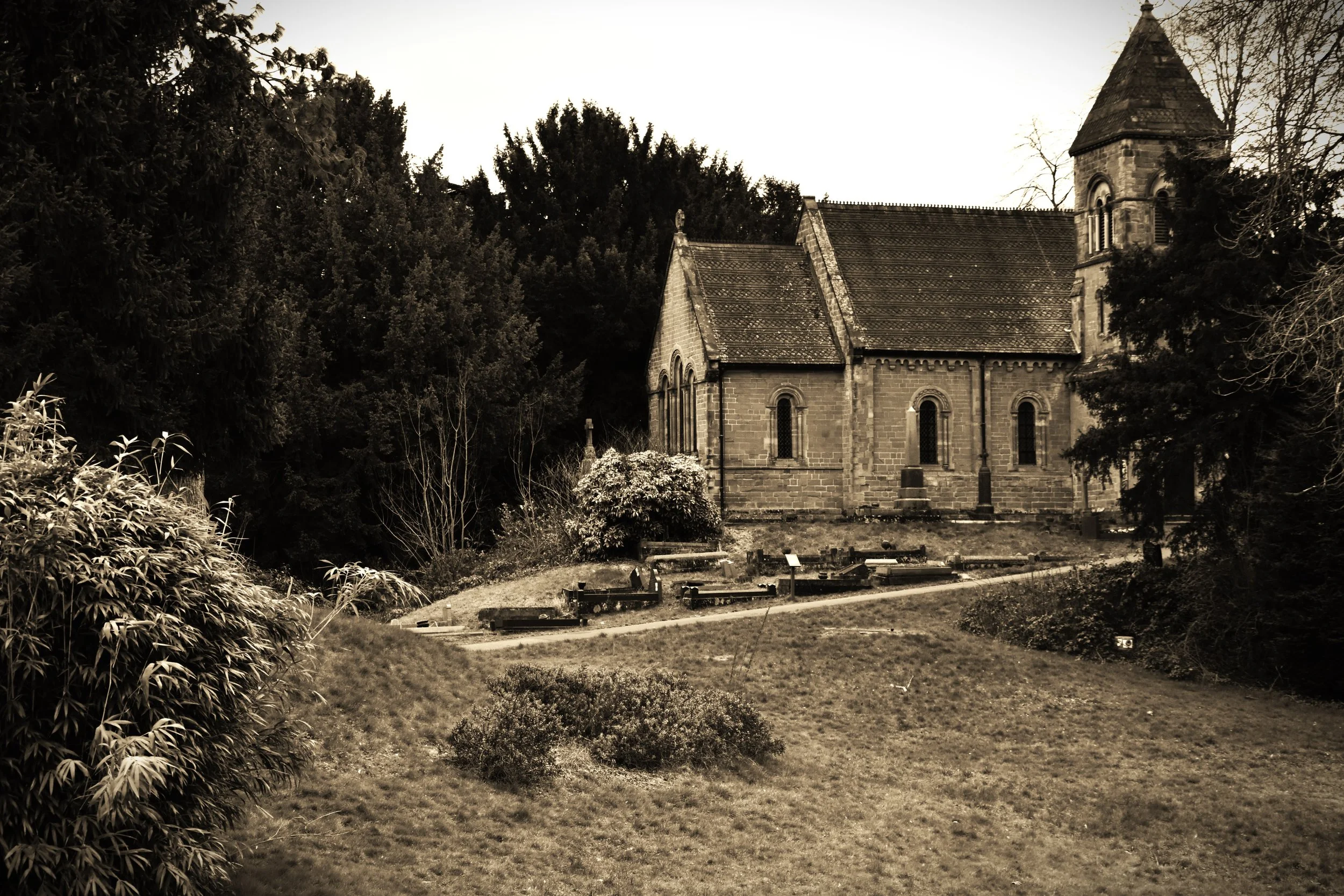
The original idea for this website was just to display some of my own photographs. Some of the information has come from sources on the web.
If you see any photographs that may relate to you and do not wish them to be displayed then please advise and I will remove them. I have attached my email address and you can also comment on the site by clicking ‘comment’ in the yellow boxes as you go along.
nowherefast360@virginmedia.com
londonroadcemetery.co.uk
Click 3 lines above right on mobiles.The Lodge
The lodge is part of a larger cemetery complex designed by Paxton, a renowned landscape designer also famous for creating the Crystal Palace for the Great Exhibition of 1851. The lodge and its associated Prospect Tower reflect a Classical-inspired Italianate style. The design was likely completed with assistance from Paxton's assistants, possibly including his son-in-law George Henry Stokes.
Photo taken during the 2000’s
Photo taken around 1840’s. The tower to the left was to allow workers to see when the funeral procession left the city.
So Why 6 Feet?
The Great Plague (1665):
The practice of burying bodies at least six feet deep is strongly linked to the Great Plague of London, when officials mandated it to prevent the spread of disease.
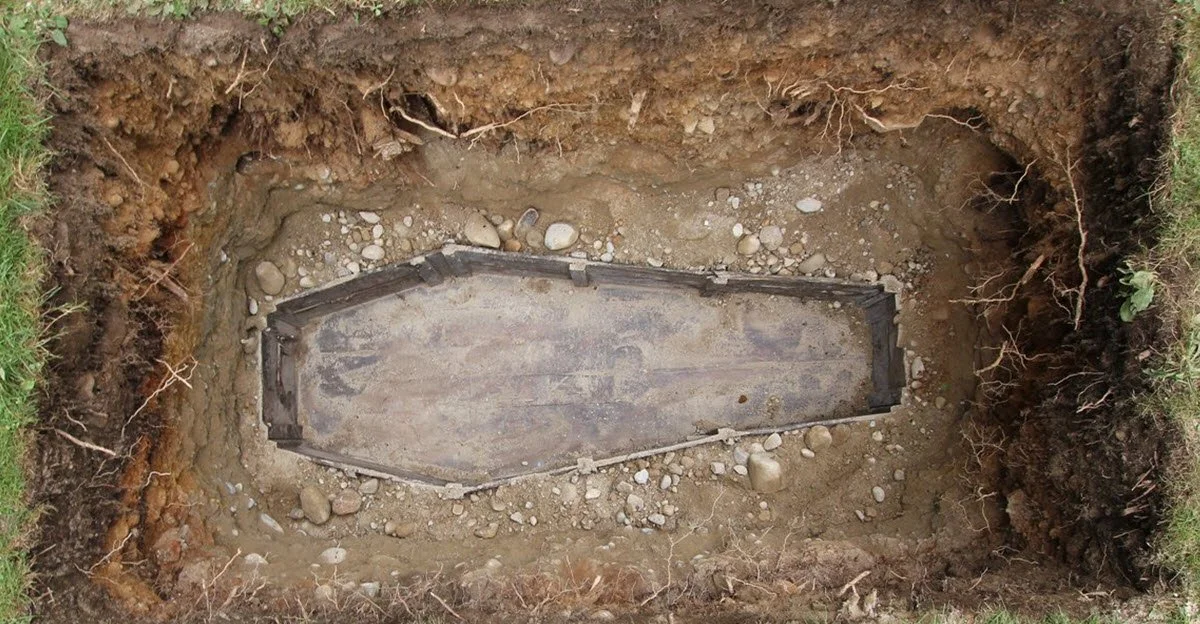

To Protect the Corpse from Being Stolen. Snatching dead bodies was common in many parts of England and Scotland in the early 1800s. Therefore, graves were always dug six feet deep to prevent body snatchers from gaining access to the buried remains. Another issue that people were worried about was animals digging up graves. An ancient practice of burying dead people six feet underground may have helped mask the odour of decay from predators.
Another rationale for this is to ensure the grave digger's safety. Some people believe that the primary reason for excavating a grave to a depth of six feet is to protect the one doing the digging. They also feel that excavating a grave to this depth might make it simpler to access the body. A gravedigger of normal size could still throw dirt out with a shovel even if they were 6 feet tall. In addition to that, he didn't need a ladder to go in or out.
But just in case………
Bell coffins:
Coffins were fitted with a rope and bell so the interred person could ring for help if they awoke.
Glass-windowed coffins:
Some coffins included glass windows and mirrors, allowing family members to check for movement.
Breathing tubes:
Some coffins had breathing tubes installed.
“taphophobia” defined as “the abnormal fear of being buried alive
Victorian Mortuaries
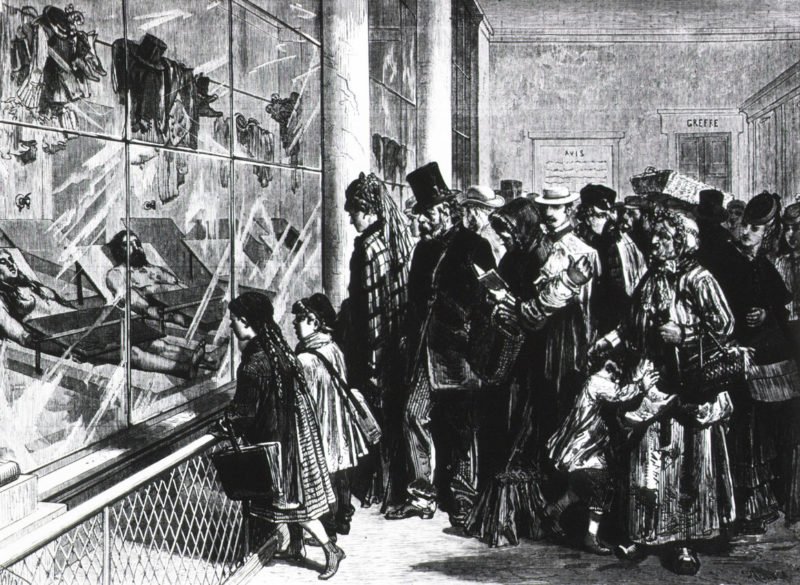
London vs. Paris:
The London morgue of the time did not permit public access, unlike the well-known Paris Morgue, which served as a morbid tourist attraction.
Unidentified Dead:
In London, descriptions of unidentified corpses were posted outside the morgue for public viewing.
Edwin Chadwick’s supplementary sanitary report of 1843 claimed that around 20,000 deaths took place in London each year among families who occupied only a single room. For the period between death and burial, which could be a week or more, these families shared that room with a decomposing corpse
An interesting fact
A mature beech tree was moved in October 1850 from its original location by the Warwick Road in Coventry to the London Road Cemetery. This feat was documented by members of the Historic Coventry Forum, who noted the tree survived the relocation and the subsequent winter to thrive in its new home near the Dissenter's Burial Chapel. The tree was already large when moved, and its size and resilience were still notable many years later.
On the final leg of the journey, part of the cemetery's boundary wall required removal to enable access from Green Lane as the tree was brought to its resting place near the Dissenters' Burial Chapel. This 2012 photograph on the right shows the section of fence that can be removed, and the short piece of wall, which would have been rebuilt soon after the operation.
The information above has been sourced from the web.St Thomas’- Tamworth Road
The Blitz
Before the raid, the government had instructed Coventry to cater for 800 casualties, and a mortuary was subsequently made near the gas works (in Gas Street) to hold 500 bodies - an astonishingly accurate figure.
It was obvious from the start that with such a high number of deaths in such a short space of time, hundreds of private burials would prove a huge burden on time and resources. After much deliberation about the popularity of such a thing, it was decided that Coventry was to be the first city of the war to hold a mass funeral.
There were several practical reasons for such a burial, not least of which was that the cost was paid for by the government, and wasn't a burden on each family. Another advantage of the mass burial was that it overcame the worrying problem of identifying individuals.
Grave Robbers in the Victorian Era
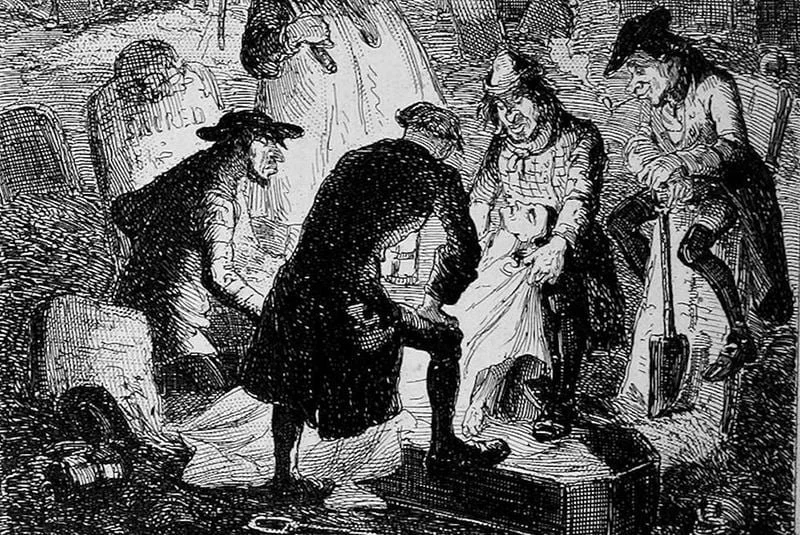
Grave robbers were a common problem in Victorian-era cemeteries. They stole everything from rings and necklaces to the bodies themselves.
“Rest in Peace” is a common epitaph on older gravestones but this wasn’t just a passing phrase in the 1800s. Family members were genuinely concerned about their loved ones’ bodies resting in peace. Families often went to great lengths to protect their loved one’s remains after burial. Victorian families who could afford it bought metal caskets and erected iron fences.
For centuries doctors have done autopsies and dissections to learn more about the human body. Grave were tempted by the money offered to them by physicians and medical schools who needed cadavers for their anatomy classes. Grave robbers were paid the equivalent of several months of workman’s wages for one body. Most often, the end of the tomb or coffin was dug up and broken open by the grave robber. Then a rope was tied around the body and it was pulled out.
Click for more info.
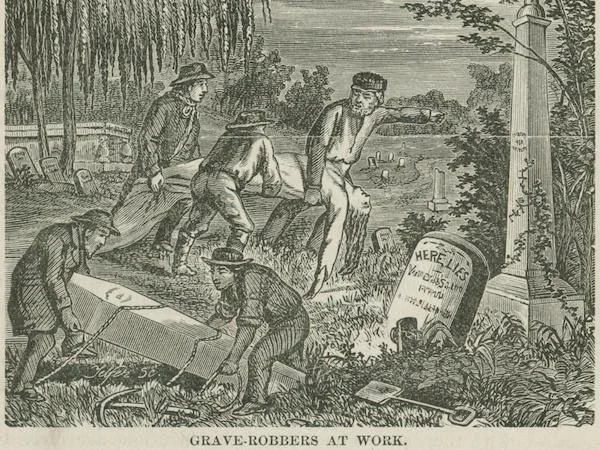
In the 1828 Select Committee on Anatomy, a doctor stated that corpses could cost between two and eight guineas.A guinea was a gold coin that was worth twenty-one shillings. A single shilling was the daily wage for a workman or labourer so a fresh corpse in good condition could be worth the equivalent of several months worth of pay!The equivalent price today would be anywhere between £150 - £1,000.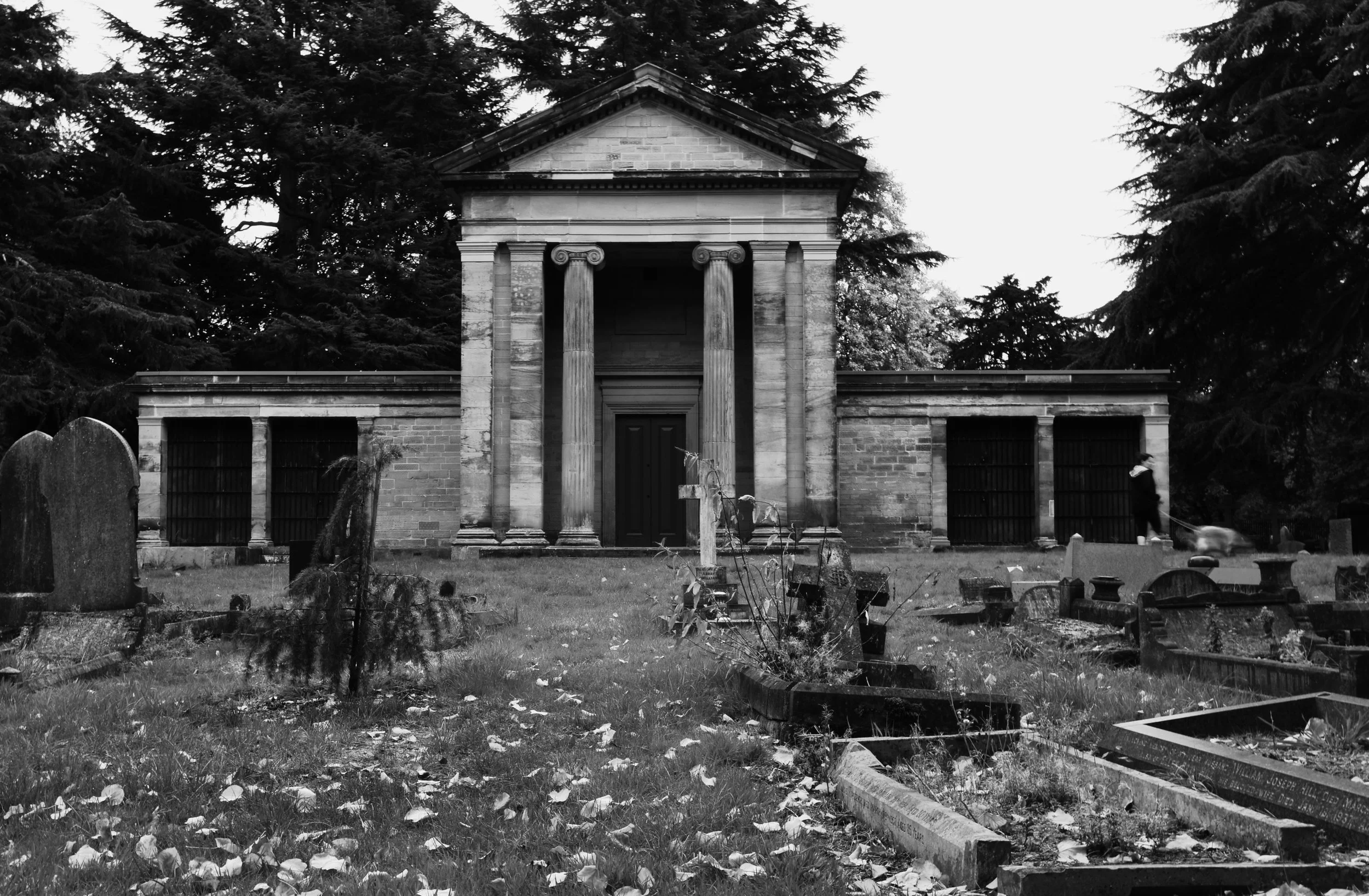
The Grade II* listed Nonconformist Chapel forms one of the main features within the Grade I listed park and garden of London Road Cemetery, which was designed by renowned landscape architect and engineer Sir Joseph Paxton and opened in 1847.
The building has had a history of misfortune, with its first fire in 1884 when dynamite used for blasting holes in the stony ground for graves blew up in one of the wings.
The building was then damaged in the second world war bombing of the city, and has remained unused ever since.
Finally, there was a major fire in 2006 caused by arson that destroyed the roof and interiors. The main roof has since been reconstructed by the Council
"Nonconformist" at London Road Cemetery refers to Protestants who dissented from the Church of England, and the cemetery was specifically established for them to be buried outside the parish churchyards.Inventor of the famous ‘penny farthing’ and the differential gear, James Starley is known as the father of the bicycle industry.
His son, William, and nephew, John Kemp Starley, also entered the bicycle industry and went on to found the Rover car company. The differential gear is used inevery car manufactured today.
Anglican Chapel
The Anglican Chapel was built as part of Joseph Paxton’s overall design for London Road Cemetery, opened in 1847. London Road Cemetery is one of the early Victorian garden cemeteries and was designed to be park for the living as much as a resting place for the dead.

But just how much will a plot cost?
A burial plot at Highgate Cemetery costs upwards of £25,000, with cremation plots costing around £5,000, but prices vary significantly depending on location and other factors. For example, a plot in the East Cemetery is about £20,000, while a plot in the West Cemetery can be double that. A full burial plot next to Karl Marx costs "upwards of" £25,000.
A burial plot at London Road Cemetery (Coventry City Council) costs between £3,115 for residents and £6,230 for non-residents for a 75-year lease on an adult plot. The price varies by plot type, with options like a cremation plot costing £2,085 for residents or £4,170 for non-residents, and a child's grave costing £737 for residents or £1,474 for non-residents.
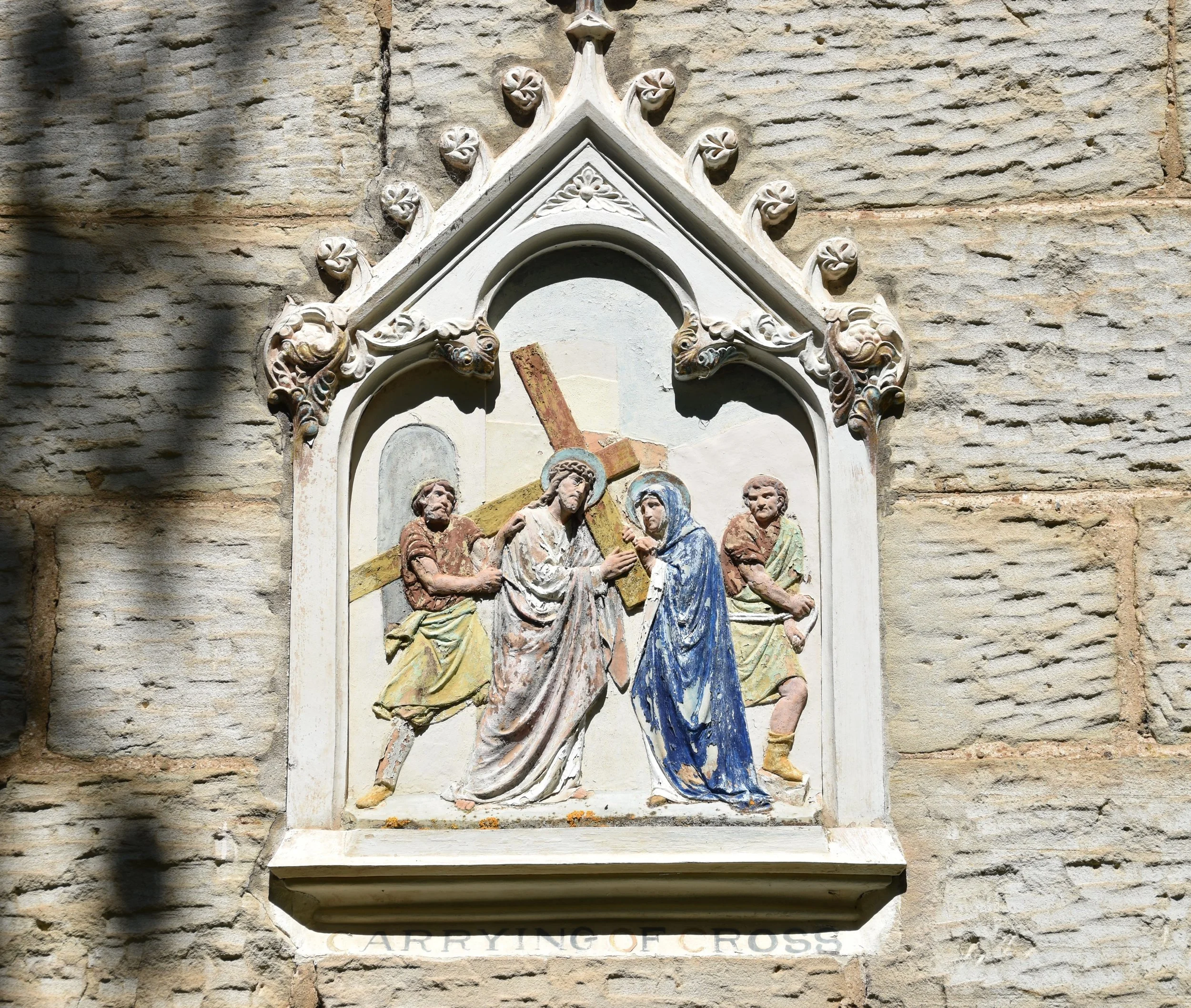
One of the Fourteen stations of the cross outside a church near Whitby.
I found this interesting picture from a website called your parking space.
Ah, a crepuscular evening among a stack of rotting coffins. That’s just what you’ll find in the dank chambers of the West Norwood Catacombs, an underground resting place for London’s Victorian dead. It might not look it, but these body pigeon holes were built out of a respect for the dead, a way of escaping the unkempt, swampy cemeteries that were overloaded with bodies from the cholera outbreak.
Friends of London Road CemeteryClick here for Facebook site

Thanks to Ant Collins from Warwick for this insight
We call them "graves" because the word ultimately comes from a Proto-Germanic word, *graba- or *graban, which meant "to dig" or "grave". The English word "grave" evolved from this ancient root, referring to the hole dug in the ground to bury a body, a meaning that has remained constant for centuries.